
Artemis Moon Mission Reveals Intriguing Details about Life in Space
The recent Artemis II mission, often informally compared to future missions such as a potential “Artemis 11”, has provided new insight into human life in deep space, marking a significant step forward since the Apollo era. According to reporting from CNN, the mission is NASA’s first crewed journey toward the Moon in more than 50 years and serves as a testing ground for future lunar landings.
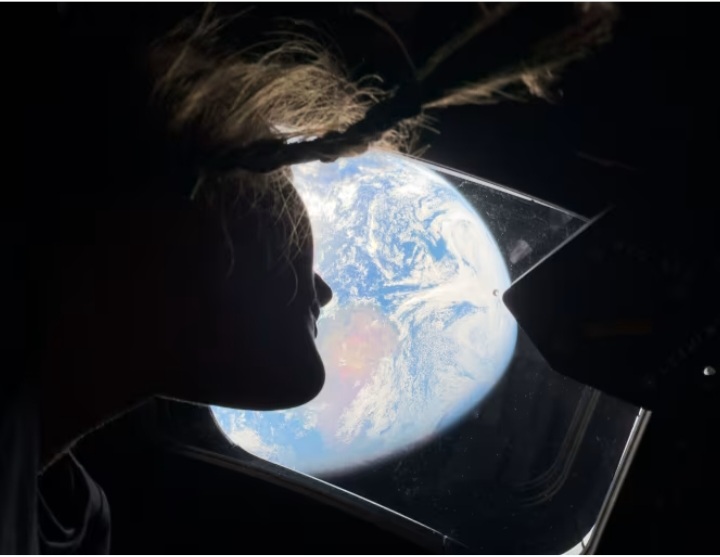
The mission carried four astronauts, Reid Wiseman, Victor Glover, Christina Koch and Jeremy Hansen, on a roughly 10-day journey around the Moon. Their spacecraft, the Orion capsule, was launched aboard NASA’s powerful Space Launch System (SLS), a next-generation rocket designed for deep space exploration.
Astronaut accounts have revealed the unusual realities of life in space. In microgravity, everyday activities such as sleeping become challenging, with crew members describing how they float and even sleep suspended in tight spaces. The human body also undergoes notable changes, including fluid shifts, motion sickness, and muscle weakening, while astronauts must adapt to isolation and confined living conditions.
Despite these challenges, the mission delivered breathtaking experiences. Astronauts reported emotional moments observing Earth from deep space and witnessing the Moon’s far side, regions never visible from Earth. These observations were supported by advanced imaging tools, including high-resolution cameras and on-board diagnostics equipment, enabling scientists to collect new data and imagery.
Technologically, Artemis represents a major leap from earlier lunar missions. The Orion spacecraft features improved life-support systems, modern navigation, and enhanced safety mechanisms, while the SLS rocket provides unprecedented thrust for human deep-space travel. The mission also tested wearable health monitors and onboard experiments to better understand how humans function in deep space.
Importantly, the mission yielded new discoveries, including detailed images of lunar craters and geological formations, as well as observations of meteor impacts on the Moon’s surface. Scientists say such data will inform future missions and long-term plans for a sustainable human presence on the Moon.
As highlighted by CNN, Artemis missions are not just about returning to the Moon but preparing humanity for deeper space exploration, including eventual missions to Mars, bringing scientists closer to understanding both space environments and the limits of human endurance beyond Earth.





















.jpeg)





































