
China Successfully Launches First Commercial Space Experimental Capsule
China has successfully launched its first commercial space-born experimental capsule, DEAR-5, into orbit, carrying 34 scientific experiments and marking a key step in the growth of the country’s private space industry.
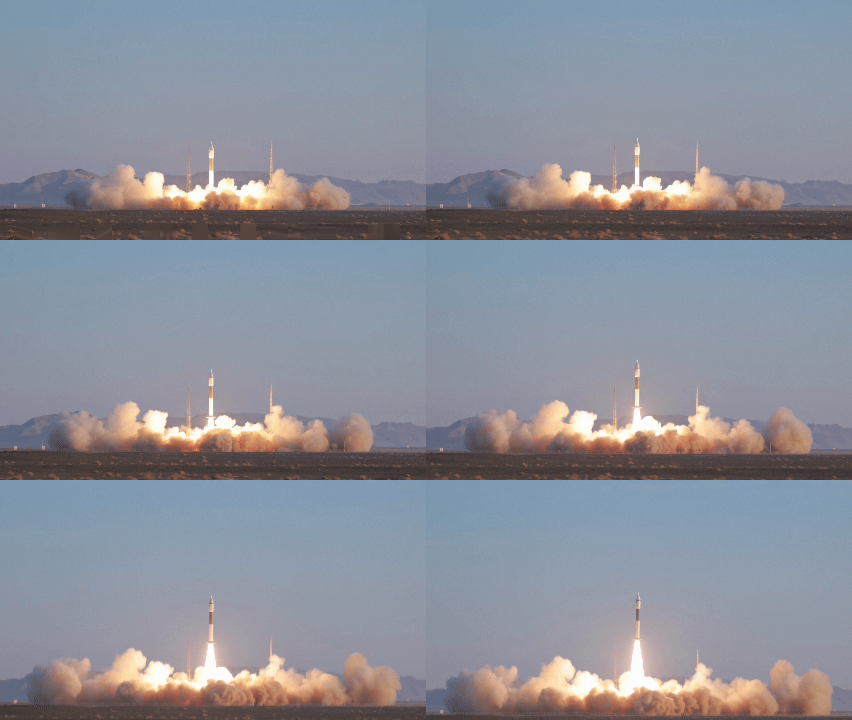
China has successfully launched its first commercial space-born experimental capsule, a move that marks an important step in the country’s growing private space industry, according to Xinhua News Agency.
The experimental capsule, known as DEAR-5, was launched on 13 December 2025 aboard a Kuaizhou-11 Y8 carrier rocket from the Jiuquan Satellite Launch Center in northwest China. The launch took place at 9:08 a.m. Beijing time and was declared successful after the rocket placed its payloads into their planned orbit.
According to Xinhua, the mission carried two payloads: the DEAR-5 experimental capsule and the Xiwang-5 Phase-2 satellite. Both were successfully deployed, marking the fourth flight of the Kuaizhou-11 rocket, which uses solid fuel and is designed for fast and flexible launches.
The DEAR-5 capsule was developed by AZSPACE, a Beijing-based commercial aerospace company. It is designed to support scientific and technological experiments in space and is capable of carrying up to 300 kilograms of cargo with an internal usable space of 1.8 cubic metres.
The capsule is carrying 34 experimental payloads provided by universities, research institutions and private companies. These experiments cover a range of fields, including microgravity research, space materials, aerospace medicine, space life sciences and emerging space technologies, according to Xinhua.
Reports by CGTN state that the capsule is equipped with an intelligent cargo management system, allowing different experiments to be operated and monitored while in orbit. It also includes systems for power supply, communication, temperature control and environmental monitoring, which ensure experiments can function safely and send data back to Earth.
DEAR-5 features thin-film solar panels and carries onboard equipment such as optical cameras, space environment sensors, a plant growth facility and a small space laboratory. These systems are intended to support long-term experiments under controlled space conditions.
The Xiwang-5 Phase-2 satellite, developed by the China Academy of Space Technology, was launched alongside the capsule. While its specific role was not detailed, Xinhua confirmed that it will operate in orbit as part of the mission.
Chinese state media note that this launch reflects the expanding role of commercial companies in China’s space programme, which has traditionally been led by state institutions. The DEAR-5 capsule allows research organisations and companies to conduct space experiments without needing to develop or launch their own spacecraft, according to Xinhua.
The mission is expected to operate in orbit for at least one year, during which experiment teams will be able to remotely monitor their projects and collect data, Xinhua reported. Officials say the platform is designed to support future commercial research missions and contribute to the development of China’s space technology sector.
Observers say the launch highlights China’s efforts to grow its commercial space economy, as private companies increasingly take part in satellite launches, space research and orbital technology development alongside state-led programmes, according to CGTN.





















.jpeg)





































