
Cuban Santería Priests Warn of Possible Violence and Unrest in 2026
Cuban Santería priests have issued their annual “Letter of the Year” warning that 2026 could bring increased violence, conflicts and social tensions. Announced in Havana during New Year ceremonies, the forecast names Oggún, the deity linked to war and metals, as the ruling spirit of the year. While cautioning of risks such as crime and instability, the priests also urged peace, unity and good health for the year ahead.
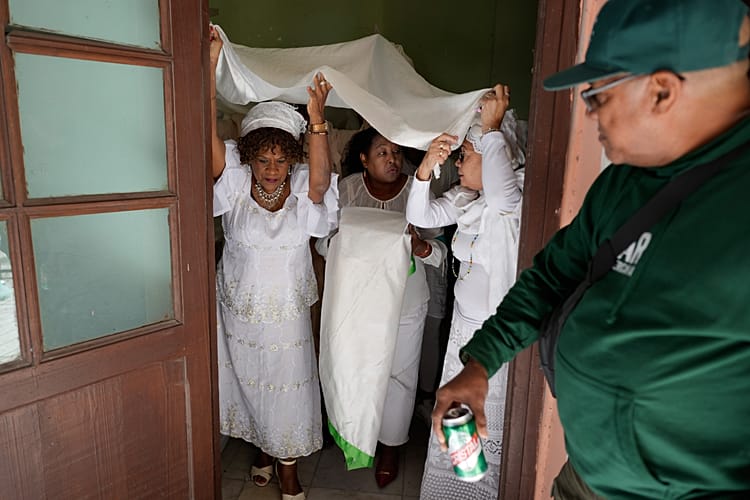
As Cuba marked the beginning of a new year, high priests from the Afro-Cuban Santería religion issued their annual prediction for 2026, warning of a possible rise in violence, conflicts and social unrest in the months ahead.
Santería priests known as Babalawos gathered in Havana on 2 January to present the traditional “Letter of the Year,” a cultural event that many Cubans and followers abroad closely follow, Africanews reported. This year’s predictions designated Oggún, the deity associated with metals, weapons, roads and conflict, as the ruling spirit of 2026. Oya, the goddess linked to winds and storms, was named as an accompanying force, a combination that the priests said signals potential dangers ahead for the country and wider region, as detailed by Africanews.
The Santería leaders explained that the influences of these spiritual forces could be reflected in increases in criminal acts and violent incidents, a likelihood of fires and accidents, and even “significant changes within the Cuban government,” according to the document released during the ceremony.
During the performance, Santería followers danced and played drums around altars dressed in traditional white robes, a ritual that is part of the long-held New Year tradition in Cuba. Priests used the occasion to make a strong call for peace, with Silvio Mendez, a Babalawo, saying that in all faiths the hope remained for peace and good health in the coming year.
Danilo Hurtado, head of the Council of Santería Priests, directly referenced current tensions in the Caribbean region, including recent U.S. military action in Venezuela and the capture of President Nicolás Maduro, which he described as strains on regional peace. Hurtado emphasised that their message was not to incite fear but to urge believers and society at large to prepare and remain vigilant.
The prediction follows a long tradition in Cuba where Santería practitioners issue yearly forecasts that blend spiritual teachings with reflections on social conditions and potential events. Santería itself is a syncretic religion, rooted in the blending of African spiritual practices brought by enslaved peoples and Catholic traditions introduced during colonial times, and is widely practiced on the island.
Thousands attend each year’s reading of the letter, and the predictions often extend beyond Cuba to influence followers in countries such as Mexico, Venezuela, Brazil, Spain and parts of the United States, places with significant Cuban-heritage communities, according to cultural observers.
Santería’s annual forecasts are not formal forecasts in the scientific sense, but they are culturally significant and attract public interest. Analysts say the warnings from religious leaders often reflect broader societal anxieties, especially in a country facing economic challenges, social pressures and geopolitical tensions, though the priests do not provide specific political or economic policy predictions.
As 2026 begins, the letter’s emphasis on caution and preparedness adds to public and cultural conversations about security and stability in Cuba and across the region. The priests’ appeal for peace and health was reiterated as the central message of the ceremony, even as they highlighted areas where followers should take care in the months ahead.





















.jpeg)





































