
Former Honduran President Freed After Trump Pardons 2024 Drug-Trafficking Conviction
Former Honduran president Juan Orlando Hernández is now a free man, after being granted a “full and complete pardon” by President Donald Trump. The pardon, signed December 1, 2025, erased a high-profile U.S. conviction that had led to a 45-year prison sentence and an $8 million fine, reveals reports from Al Jazeera.
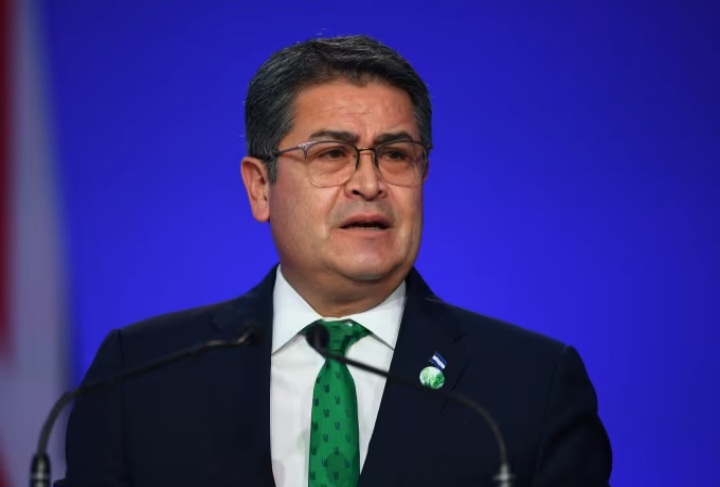
Hernández, who served as president of Honduras from 2014 until 2022, was convicted in March 2024 in a Manhattan federal court; a judge delivered sentencing in June of that year. He had been found guilty of conspiring to import cocaine into the United States and related firearms offenses. The Guardian reports that prosecutors said that during his presidency, he accepted millions of dollars in bribes and used state military and police forces to facilitate and protect shipments of cocaine, helping move at least 400 tons through Honduras to U.S.
His conviction capped years of investigation into what U.S. prosecutors described as a “narco-state,” operating under the cover of political power.
On Tuesday, December 2, 2025, Hernández’s attorney, Renato Stabile, confirmed that Hernández had been released from a West Virginia prison early that morning. “On behalf of President Hernández and his family, I would like to thank President Trump for correcting this injustice,” the lawyer said. The family expressed relief, calling the pardon “a lifeline” after nearly four years behind bars.
The decision triggered strong dual-party criticism. Lawmakers from both sides of the aisle questioned how a president known for a tough public stance on narcotics could pardon someone convicted of facilitating one of the largest cocaine-trafficking schemes in history, according to reports from Politico.
In response, the Trump administration framed the pardon as an attempt to “correct a Biden-era error.” White House press secretary Karoline Leavitt argued that Hernández’s trial was politically motivated and lacked the fairness deserved by a former head of state, echoing Trump’s claims that Honduras had mounted a campaign of “over-prosecution.”
However, the pardon comes at a time when the administration is publicly intensifying a crackdown on Caribbean drug trafficking, including deadly strikes on suspected smuggling boats and aggressive actions against networks linked to foreign regimes. Critics, including former anti-narcotics officials, argue the pardon starkly contradicts those efforts. One former senior DEA official said the move “shows the entire counter-drug effort is based on lies and hypocrisy.”
For defenders of the pardon, however, Hernández’s release is seen as rectifying what they view as a politically charged prosecution, one that unfairly targeted a former leader. As Trump put it, many Hondurans believed he was “treated very harshly and unfairly.”
With the pardon now formalized, Hernández, once convicted of helping to ship hundreds of tons of cocaine to U.S. soil, is free. The move has reignited debate over U.S. priorities and consistency in its global fight against drug trafficking.





















.jpeg)





































