
Humanoid robots still years from everyday use, experts warn
Global tech leaders say humanoid robots could take between two and ten years before reaching widespread household use, citing challenges in reliability, safety, and real-world performance
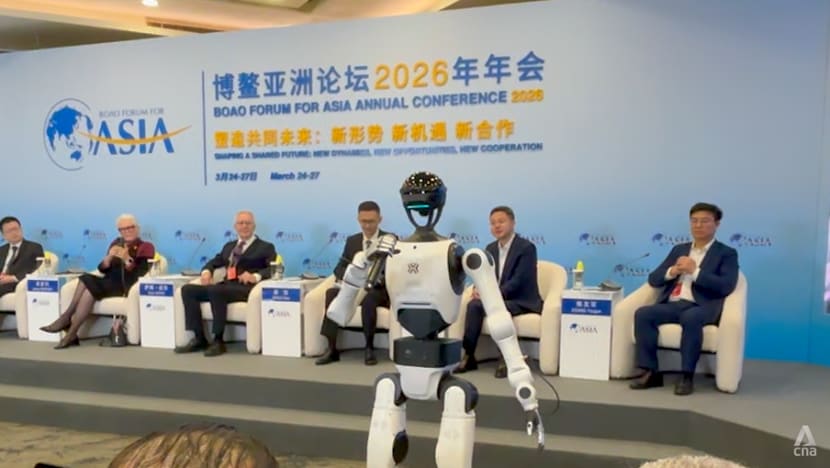
The dream of humanoid robots becoming part of everyday life remains some years away, with industry experts warning that major technological breakthroughs are still needed before mass adoption can happen.
Speaking at the Boao Forum for Asia, Chinese technology leaders said a defining breakthrough, similar to what ChatGPT did for artificial intelligence, could take anywhere from two to ten years to materialise.
According to CNA, Wang Xiaogang, co-founder of SenseTime, said such a breakthrough could come within two years if advancements in data scaling and simulation technologies accelerate development. However, other experts were more cautious.
Shao Hao, a robotics specialist at Vivo, warned that the process could take closer to a decade due to difficulties in gathering large amounts of affordable data needed to train robots for real-world environments, as reported by CNA.
The discussions come as China increases investment in “embodied intelligence”, a form of AI designed to operate in physical machines such as robots and drones. This sector has been identified as a key future industry alongside quantum computing and advanced communications technologies.
Despite impressive demonstrations, such as robots performing complex movements during China’s Spring Festival celebrations, experts stressed that most systems are still limited to controlled environments and are not yet ready for widespread use.
Shen Dou, an executive at Baidu, said current robots still face major physical limitations, including poor stability, limited durability and lack of precise movement, according to CNA.
“There is still a long way to go before we reach an ‘iPhone moment’ for humanoid robots,” he said, referring to a stage where the technology becomes widely accessible and commercially viable.
The issue of public trust also emerged during the panel, when a humanoid robot itself asked how it could gain acceptance from society. Former New Zealand Prime Minister Jenny Shipley responded that trust would depend on reliability, clear boundaries and responsible use.
Experts further raised concerns about governance, warning that rapid development of robotics could lead to job displacement, data misuse and safety risks if not properly regulated.
According to CNA, Singapore has been highlighted as a global example in managing these risks through its artificial intelligence governance frameworks, which emphasise accountability, human oversight and ethical use of technology.
As countries race to lead in robotics innovation, analysts say balancing technological progress with social stability will be critical to ensuring that the benefits of humanoid robots do not come at the cost of public trust and safety.





















.jpeg)





































