
India Pushes Women’s Seat Quota as Boundary Changes Spark Political Clash
India’s government has moved to fast-track a law reserving 33% of parliamentary seats for women, but its decision to link the reform to constituency boundary changes has triggered strong opposition criticism ahead of the 2029 elections.
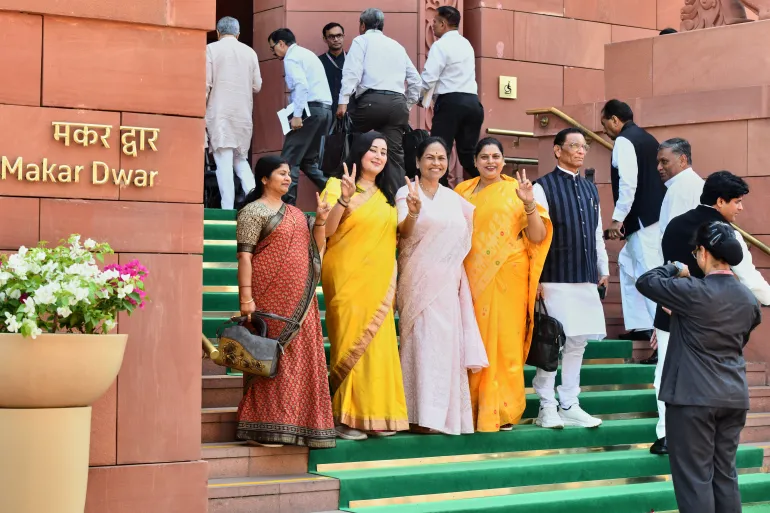
The government of India has introduced legislation to increase women’s representation in parliament, while also proposing a major redrawing of electoral boundaries, a move that has sparked political tensions.
Prime Minister Narendra Modi said the proposals represent a “historic step” towards empowering women, as three bills were tabled before the lower house, the Lok Sabha, during a special sitting. Two of the bills aim to implement a 2023 law that reserves 33 percent of seats for women in parliament and state legislatures. However, the third bill focuses on delimitation, a process of redrawing electoral constituencies based on population size.
According to Al Jazeera, the government has linked the implementation of the women’s quota to this delimitation process, which is expected to take effect ahead of the 2029 general elections. The plan also includes increasing the number of seats in parliament from 543 to 850.
Women currently hold about 14 percent of seats in the Lok Sabha, showing the gap the proposed reforms seek to address, as reported by Al Jazeera. While there is general support for increasing women’s participation in politics, opposition parties have raised concerns about the boundary changes. Critics argue that the delimitation process could favour the ruling Bharatiya Janata Party (BJP), which has strong support in northern regions with higher population numbers.
Opposition leader Rahul Gandhi criticised the proposal, saying it is more about political advantage than women’s empowerment. He stated that the plan is an attempt to gain power through delimitation and gerrymandering, according to Al Jazeera. Leaders from southern states have also expressed concern, warning that population-based seat allocation could reduce their influence, as those regions have seen slower population growth.
The Constitution of India requires parliamentary seats to be adjusted based on census data, but this has not been done since 1971. The government now plans to use data from the 2011 census. However, opposition parties have called for the process to wait for the results of the ongoing national census, as reported by Al Jazeera.
Government officials have defended the proposals, saying the changes will not be discriminatory and that representation will remain balanced across all states. Tensions were visible during the parliamentary session, with protests from some lawmakers. In Tamil Nadu, Chief Minister M. K. Stalin opposed the bill, accusing the ruling party of attempting to sideline certain regions, according to Al Jazeera.
The bills require a two-thirds majority in parliament to pass, setting the stage for a heated debate as lawmakers weigh gender representation against electoral reforms.





















.jpeg)





































