
Kellie Sloane Poised to Claim NSW Liberal Leadership
Liberal MP Kellie Sloane is expected to become the new Opposition Leader in New South Wales by Friday morning, replacing Mark Speakman. Her potential elevation signals a shift toward the party’s moderate wing and could reshape its policy direction, particularly on climate and communication.
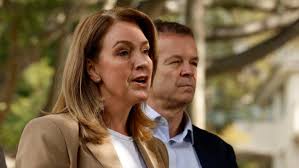
The New South Wales Liberal Party is reportedly preparing to install Kellie Sloane, MP for Vaucluse, as its next Opposition Leader by Friday morning, a change that could reshape the party’s image and policy direction.
A report from The Guardian notes that Sloane, a relatively new MP and former journalist, is widely seen as the frontrunner to replace Mark Speakman.
If the party room confirms her as leader, the move would represent a shift toward the moderate wing of the NSW Liberals, and could signal a recalibration of how the opposition positions itself against the government, particularly on contested issues such as climate policy. According to The Guardian, some in the party believe her communication skills and moderate profile will make her a stronger public face than Speakman, whose polling has reportedly slipped.
Sloane has held the role of Shadow Minister for Health and has been vocal in criticizing the Minns Labour Government’s handling of the health sector. Her background includes a long career in journalism, followed by leadership work at Life Education, a prominent health education charity.
Her emergence as a leader comes at a time of internal stress. As The Guardian reports, tensions remain over the Liberal-Nationals coalition’s future policy on net-zero emissions, a divisive issue that analysts believe could fracture the party if handled poorly under new leadership.
Adding to the spotlight, Sloane has previously drawn threats after publicly condemning a neo-Nazi rally held outside NSW Parliament.
For Speakman, the leadership challenge reflects broader concerns about his ability to reinvigorate the state opposition ahead of the 2027 elections. His style, described by some as cautious and legalistic, has been contrasted with Sloane’s communication-first approach.
According to internal sources cited by political analysts, Sloane secured support by positioning herself as someone who can articulate unlikely policies more effectively to the public, while also broadening the Liberals’ appeal in urban and moderate electorates. The Guardian also suggests that if she takes over, her leadership could force a rebalancing of the party’s stance on key issues such as energy policy, climate change, and social liberalism.
Whether Sloane’s leadership will unite the party or inflame factional divisions remains to be seen. But one thing is clear, with her potential elevation, the NSW Liberal Party may be betting on a new style of opposition, one that combines moderate policy realism with polished public communication.





















.jpeg)





































