
Korea University, Hamill School Strengthen Inclusive Pathways for Multicultural Learners
Korea University and Hamill School have signed an MOU to collaborate on mentoring, talent development and career programmes for students from multicultural backgrounds. The partnership supports a wider Korea University strategy, including a scholarship project expected to provide ₩4 billion in aid by 2030, according to institutional reports.
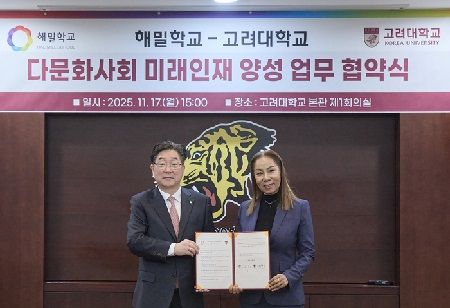
Korea University has formalised a new cooperation agreement with Hamill School to advance mentorship, career guidance, and talent development programmes for students from multicultural families in South Korea. The development was confirmed in mid-November following a memorandum of understanding (MOU) signing ceremony held at the university’s main campus. According to a report published by Korea University News, the agreement forms part of the institution’s long-term commitment to inclusive education and social support initiatives.
The partnership outlines joint activities that include structured mentoring between university students and Hamill School learners, multicultural talent-growth camps and expanded career-exploration avenues. Details of these planned programmes were reported by Asia Education Review, which described the collaboration as a strategic approach designed to create long-term empowerment rather than short-term intervention.
Hamill School was founded in 2013 by South Korean vocalist and social advocate Kim In-soon, known professionally as Insooni, whose personal experiences with racial identity shaped her advocacy for children from diverse backgrounds. Insooni emphasised that the school was created to provide both academic development and emotional support for young people navigating multicultural identity challenges.
The signing ceremony was followed by a motivational lecture titled Leader Lecture to Change the World, where Insooni addressed students and faculty. She reportedly highlighted self-acceptance as the first step toward personal growth and encouraged young people not to fear differences but to recognise them as strengths.
The collaboration aligns with Korea University’s wider multicultural empowerment strategy, which includes the Leaders 120 Multicultural Talent Scholarship System, launched in 2024. Information shared by Korea University News indicates that the scheme plans to invest nearly ₩4 billion by 2030 to support 120 students from multicultural communities, demonstrating long-range educational equity planning.
The partnership comes amid increased national discussion over support structures for multicultural youth in South Korea. Academic reviews and social research trends, such as those referenced in national education analyses, have noted that while multicultural populations are steadily rising, access to tailored support systems remains uneven across different regions and institutions.
Education watchers believe that multi-institutional collaboration could contribute to policy, talent and leadership outcomes over the next decade. Commentaries in educational circles suggest that joint initiatives like mentoring and experiential learning could offer practical benefits that go beyond classroom instruction by reinforcing confidence, exposure, and long-term planning for students.
With the agreement now active, both schools are expected to roll out detailed implementation plans in phases. Korea University has previously stated through its communication platforms that supporting diverse learning pathways forms part of its institutional development vision leading toward 2030.





















.jpeg)





































