
Micron Announces $9.6 Billion AI Chip Plant in Japan.
Micron Technology plans to invest $9.6 billion to build a new AI-focused memory-chip plant in Hiroshima, Japan. The facility, expected to begin construction in 2026 and start production by 2028, will manufacture high-bandwidth memory (HBM) chips used in artificial-intelligence systems. The Japanese government may subsidise up to ¥500 billion.
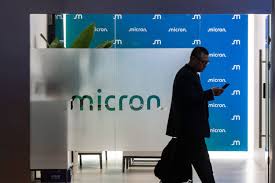
U.S. chip-maker Micron Technology is reportedly preparing a massive investment of ¥1.5 trillion (≈ US $9.6 billion) to build a new memory-chip manufacturing facility in western Japan. The plant, to be located at its existing Hiroshima site, will produce advanced high-bandwidth memory (HBM) chips, a crucial component for artificial-intelligence infrastructure and data-centre operations worldwide.
According to a report published by Japanese business daily Nikkei, construction is slated to start in May 2026, with shipments expected around 2028. The government of Japan, through the Ministry of Economy, Trade and Industry (METI), is said to support the project with subsidies up to ¥500 billion.
By situating high-end memory-chip production in Japan rather than its typical hubs such as Taiwan, Micron aims to reduce exposure to geopolitical tensions and supply-chain bottlenecks.
It also positions Micron to compete more directly with other leading memory-chip producers such as SK Hynix and Samsung Electronics, especially as demand for HBM and related chips surges in tandem with the global AI boom, The Economic Times reported.
For Japan, the move represents another major step in a broader government-led strategy to rebuild and expand its domestic semiconductor capacity after years of decline. Since 2021, Tokyo has committed several trillion Yen to attract foreign investment and rejuvenate chip manufacturing on home soil.
HBM chips, known for high throughput and low latency, are essential for running AI models, heavy data processing, and advanced computing tasks. As companies and cloud providers scale up AI infrastructure, demand for such memory chips has surged. Bloomberg noted that analysts believe Micron’s new facility could ease supply constraints and lower the risk of shortages.
Moreover, using Japan as a manufacturing base may give Micron advantages in access to advanced materials, skilled labour and a stable regulatory environment, factors that are increasingly valued by global tech supply chains under pressure from geopolitical uncertainty.
Micron’s relationship with Japan is not new. Its Hiroshima plant has previously produced DRAM chips, and in recent years, the company began adopting advanced technologies such as extreme-ultraviolet (EUV) lithography for next-generation chips.
Still, Reuters cautions that its report “could not immediately verify” the details, which stemmed from unnamed sources familiar with the plan.





















.jpeg)





































