
OPINION: When Classrooms Turn Dangerous; How Kidnappings Are Stealing Nigeria’s Education
Nigeria’s children are learning fear instead of lessons as kidnappings continue to target schools, disrupting education across the country. From the Chibok girls to hundreds of students in recent attacks, parents, teachers, and communities face the harsh reality of classrooms becoming unsafe.
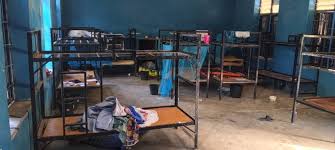
There is a sound every parent in northern Nigeria has learned to fear. It is not thunder, or gunfire, or the restless cry of the night. It is the silence that follows a school bell, the silence that means the children did not come home.
For more than a decade, Nigeria’s education system has been fighting a quiet war. Not against poor grades. Not against failing infrastructure. But against men who believe that the easiest way to break a nation is to break its children. Kidnapping has become the black market of terror, a trade built on fear, ransom, and vanished futures.
The headlines come and go: twenty-five girls taken from Kebbi, over three hundred students abducted in Niger State, dozens missing from a rural boarding school, children fleeing classrooms with their notebooks still on their desks. But behind every headline is a story that textbooks never prepared teachers for, the story of what happens when school becomes the most dangerous place to be.
Parents in affected communities wake up each morning praying that the school their children left in uniform will still be standing by sunset. Teachers now teach with one eye on the door. Children study multiplication tables while memorising escape routes. This is the new curriculum of fear.
Long before the December 2025 kidnappings, the Chibok girls had already changed the psychology of schooling. For many rural families, Chibok was the moment education stopped feeling like hope and started feeling like risk.
A generation has grown up with the knowledge that uniformed children, especially girls, can disappear, and the world will continue turning.
Each abduction forces another school to shut its gates temporarily, though temporary often becomes months. Attendance drops. Teachers transfer or resign. Some children, especially girls, never return to class. And in communities where poverty already stands guard at the door, education was the last fragile ladder out. Breaking that ladder is breaking everything else.
Every kidnapping is also an interruption, not just of lessons but of childhood. Trauma follows the survivors home. Fear shadows those still in school. Even younger siblings, who have never been abducted, grow up scared of classrooms they have not yet entered.
When hundreds of students were taken from St. Mary’s Catholic School in Niger State in 2025, some parents said they would rather keep their children home indefinitely than “test God again.” Others spoke of permanently withdrawing girls. A country cannot educate its future if its children are too afraid to be present.
The tragedy is not only in the kidnappings themselves, but in the quieter consequences. A child who misses school for a year does not simply fall behind; they fall out. A community with shuttered classrooms grows older but not wiser. A nation that loses its students does not just lose graduates; it loses doctors, engineers, teachers, and leaders who will never exist. Nigeria, Africa’s most populous nation, cannot afford to gamble with education. Every abduction is a theft of human capital, a robbery of national potential.
There is a heartbreaking truth tucked inside Nigeria’s kidnapping crisis. Schoolchildren have become the bravest people in the country.
They pack their books knowing that others who looked like them never came back. They sit in class with the full knowledge that their innocence is the bargaining chip of criminals. They dream despite the darkness around them.
No child should need courage to go to school. Courage should be for mountain climbers, soldiers, explorers, not seven-year-olds learning vowels.
The government launches rescue operations. Communities form vigilante groups. Some schools install fences and hire guards. These are patches on a deep wound.
Nigeria must decide, clearly, loudly, publicly, that children are not collateral. That education is not optional. That classrooms are not battlegrounds. Security must be strengthened. Rural schools must be protected. Families must be supported. And the kidnappers’ economic incentives must be destroyed through intelligence-driven policing, not temporary reactions. Because the truth is painful but simple: if kidnappers learn that stealing children works, they will keep stealing children.
The story of Nigerian education does not have to end in fear. Already, there are communities rebuilding schools brick by brick. Teachers returning after attacks. Students walk long distances because they refuse to let terror dictate their futures.
Hope is stubborn in Nigeria; it survives even when the world doubts it. But hope alone cannot keep children safe. That requires courage from adults, commitment from government, and outrage from society. It requires understanding that while buildings can be repaired, lost education cannot be replaced.
A country that allows its children to learn fear will grow into a nation that remembers fear. A country that protects its children will grow into a nation that remembers strength.
The choice is still there. But time, and childhood, is running out.





















.jpeg)





































