
Pakistan’s Solar Shift Softens Blow of Iran War Energy Shock
Pakistan is increasingly turning to solar power to cushion households and farmers from rising global fuel prices triggered by the US-Israel war on Iran, though challenges of inequality and dependency remain.
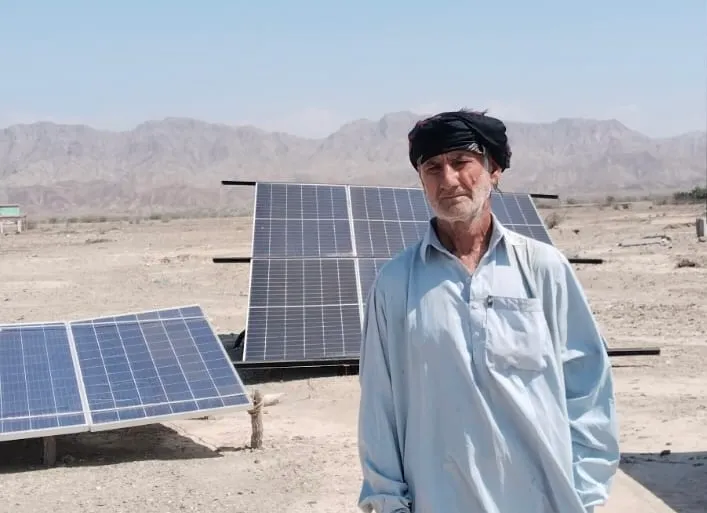
Pakistan’s rapid adoption of solar energy is helping shield millions of households from the global energy crisis sparked by the ongoing US-Israel war on Iran, with farmers and urban residents increasingly relying on renewable power to survive rising fuel costs.
According to Al Jazeera, tensions in the Middle East and disruptions around the Strait of Hormuz, a key global oil route, have driven up fuel prices, exposing countries like Pakistan that depend heavily on imported energy. The report states that about 80 percent of Pakistan’s oil imports pass through the strait, making the country highly vulnerable to supply shocks.
However, a growing shift to solar power is easing the pressure. Al Jazeera reported that by 2025, about 25 percent of Pakistani households had adopted solar energy in some form, a sharp increase from previous years. This transition has significantly reduced reliance on costly fuel imports and provided a more stable source of electricity.
In rural areas, farmers are among the biggest beneficiaries. In Balochistan, farmer Karim Baksh switched from diesel-powered irrigation to solar energy after fuel prices became unaffordable. According to Al Jazeera, the move has allowed him to maintain crop production without worrying about fluctuating diesel costs, ensuring consistent irrigation even during extreme heat.
Urban households are also turning to rooftop solar systems as a practical alternative to unreliable electricity supply. Al Jazeera reported that many middle-class families are able to recover installation costs within a few years and then benefit from free electricity, with some even selling excess power back to the national grid through net-metering systems.
Experts say this shift has already saved Pakistan billions in fuel imports. A study cited by Al Jazeera indicates that solar adoption has helped the country save more than $12 billion since 2018, highlighting its growing role in strengthening energy security.
Despite these gains, the transition is not without challenges. According to Al Jazeera, the high upfront cost of solar systems means that poorer households are often unable to access the technology, raising concerns about inequality. Analysts warn that this could create a two-tier energy system, where wealthier citizens benefit from solar power while lower-income groups remain dependent on the national grid.
There are also concerns about new forms of dependency. Al Jazeera reported that most solar panels used in Pakistan are imported from China, meaning the country may be shifting from reliance on foreign fuel to reliance on imported technology.
While the government has introduced policies such as net-metering to encourage solar use, it has also reduced incentives in recent years due to financial pressure on the power sector, according to Al Jazeera.
Even so, for many Pakistanis, solar energy is proving to be a reliable lifeline during uncertain times. As global energy markets remain volatile, the country’s quiet solar revolution is emerging as a key buffer against external shocks, helping sustain livelihoods in both rural and urban communities.





















.jpeg)





































