
US University Blocking Students amid Trump Crackdown on Chinese Students
A leading United States university is facing mounting criticism after reportedly blocking Chinese graduate students amid an escalating federal crackdown linked to policies introduced under President Donald Trump.
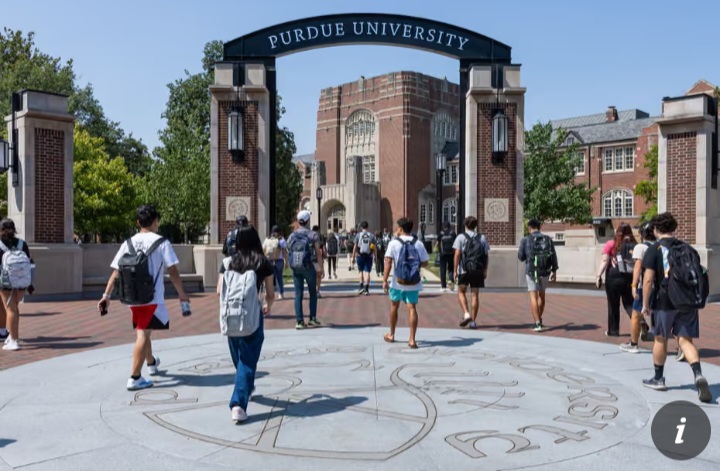
According to reporting by The Guardian, Purdue University has denied implementing any formal restrictions on applicants from China. However, the institution is alleged to have quietly rescinded dozens of admission offers made to Chinese graduate students after warnings from U.S. legislators raised national security concerns about foreign academic influence.
The controversy follows correspondence sent last year by the US House Select Committee on the Chinese Communist Party to several American universities requesting detailed data on Chinese students enrolled in science and technology programmes. In its communication, the committee warned that U.S. universities were increasingly being used as “conduits for foreign adversaries to illegally gain access to critical research and advanced technology”.
Students and faculty members at Purdue claim that an unofficial policy has since taken hold, resulting in the automatic rejection of applicants from China and other countries designated by Washington as strategic adversaries. Graduate admissions decisions that were once handled independently by academic departments are now reportedly being reviewed centrally, with some previously accepted students seeing their funded offers withdrawn without explanation weeks after acceptance.
In a statement to the Guardian, university spokesperson Erin Murphy insisted that “there is no ban” on Chinese students, though she declined to directly address allegations that multiple offers had been rescinded.
Purdue’s actions come amid a broader shift across the U.S. higher education sector. Several universities, including the University of Illinois Urbana-Champaign and Columbia University, have scrapped or wound down partnerships with Chinese academic institutions in recent months following political pressure from lawmakers concerned about espionage risks tied to joint research programmes.
Critics argue that such measures risk undermining academic freedom and merit-based admissions while deepening uncertainty for international scholars seeking to study in the United States, particularly as geopolitical tensions between Washington and Beijing continue to shape university policy and federal immigration enforcement.





















.jpeg)





































