
Venezuelan Deportees Allege Torture in El Salvador Mega-Prison
Venezuelans deported from the United States to El Salvador have detailed harrowing accounts of torture and abuse inside the country’s high-security Terrorism Confinement Center (Cecot), according to reporting by The Guardian and human rights groups.
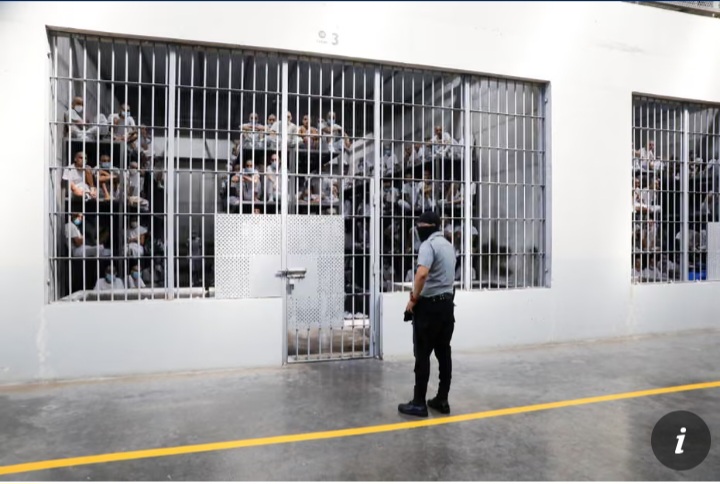
A group of 18 men has filed a petition before the Inter-American Commission on Human Rights, alleging systematic mistreatment after being transferred to the prison in 2025. The detainees, many of whom reportedly had no criminal records, claim they were subjected to beatings, sexual assault, and extreme deprivation.
One former detainee described being assaulted immediately upon arrival. “When I got off the plane, they picked me up with blows to the ribs,” he said, recounting how guards lifted him by handcuffs, causing “unimaginable pain.” He added that beatings were frequent, leaving him unable to walk for days, while screams from neighbouring cells were constant.
Witness testimonies paint a picture of relentless abuse. Prisoners reported being held in windowless cells under bright lights that never switched off, deprived of adequate food, water, and medical care. In some cases, detainees resorted to hunger strikes and even self-harm protests, but guards allegedly ignored their suffering. “The guards told us that human rights did not exist,” one man said.
Human rights organisations, including the Global Strategic Litigation Council (GSLC), have backed the claims, arguing that the deportations exposed migrants to foreseeable abuse. Belle, a representative of the GSLC, said the testimonies demonstrate “a pattern of state-enabled cruelty” and called for accountability, reparations, and psychological support for survivors.
The controversy stems from a U.S. policy that saw hundreds of Venezuelans deported to El Salvador under allegations of gang affiliation, often based on limited evidence such as tattoos. Investigations suggest many had no prior convictions, raising serious due process concerns.
Reports by watchdog groups indicate the abuses are not isolated incidents but part of a broader pattern of systemic violations within El Salvador’s prison system, including torture and enforced disappearances.
As legal challenges mount in international and U.S. courts, pressure is growing on both governments to address the allegations. For survivors, however, the psychological scars remain, with many describing Cecot not as a prison, but as a place where “you arrive in hell.”





















.jpeg)





































