
Victims or Villains? The Debate Over Women Filmed Without Consent
Recent viral videos of women filmed without their consent in Kenya and Ghana have sparked widespread outrage. While many advocate for accountability for the perpetrators, some argue that the women involved could have avoided such situations by being more chaste or dressing more modestly. This opinion piece addresses the real issue at hand: the violation of privacy and consent.
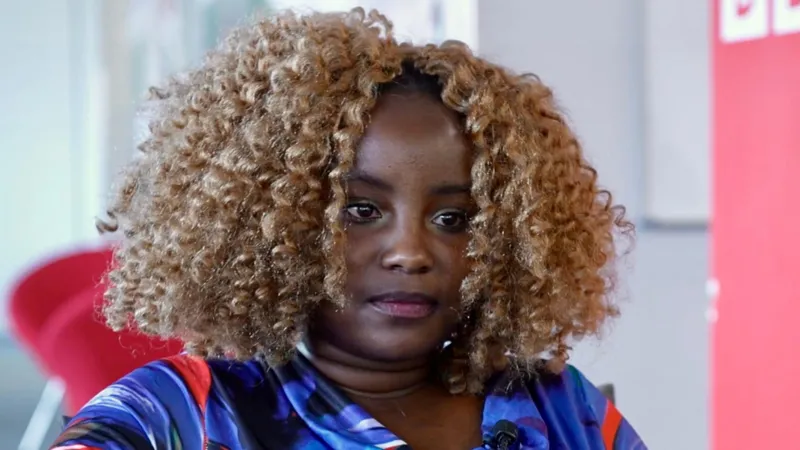
In an unsettling trend reported by the BBC, women in Kenya and Ghana have become victims of secret filming by a man who approaches them in public spaces and records their interactions without their consent. The footage is then shared online, often amassing millions of views, subjecting the women to public scrutiny and ridicule.
One such incident occurred when Joy Kalekye, a 19-year-old student from Nairobi, discovered a video of herself posted on social media after a friend alerted her on Valentine’s Day. The video showed Kalekye standing on the side of a busy Nairobi road, engrossed in her phone, unaware that she was being filmed by a man she had met briefly the year before. Upon watching the clip, Kalekye realized he had recorded her without her knowledge, and the video was later shared on platforms like TikTok and YouTube, garnering significant attention. Kalekye was not alone—similar videos featuring women being approached by the man in Kenya and Ghana, touching their hair, asking for their phone numbers, and making unsolicited advances, have also gone viral, according to a report by the BBC.
These videos have led to a wave of online abuse, with many viewers mocking the women for their actions, appearance, and dress. Some critics argue that if these women had been more "chaste" or dressed more modestly, they would not have attracted the unwanted attention. However, this perspective grossly misunderstands the issue at hand. The real problem is the violation of consent and privacy. No one should be subjected to public ridicule or have their personal interactions filmed and shared without their permission, regardless of their appearance or behavior.
Brenda Yambo, a legal counsel at the Federation of Women Lawyers in Kenya (FIDA-Kenya), highlights this by stating that the real issue should be the crime of non-consensual recording, not the victim's moral behavior. "The focus shifts to the woman's choices, her morality, and her appearance," Yambo explained, according to the BBC. This mentality only reinforces the harm done to the victims, discouraging others from coming forward, and perpetuating a culture of victim-blaming.
Rather than addressing the real issue, the actions of those filming and sharing the content, many online commentators have shifted the blame to the women themselves. This is a classic case of victim-blaming, where the behavior, dress, and morality of the women are scrutinized while the perpetrators remain largely unpunished. One such individual, Kelvin Karume, a 22-year-old from Nairobi, downloaded and re-uploaded Kalekye’s video on his TikTok account, where it gained millions of views in just a few hours. Only after Kalekye reached out to him did Karume take the video down. However, other similar videos remained on his profile, as reported by the BBC.
The fact that such content continues to be circulated speaks to a larger societal issue: the lack of accountability for those who violate privacy, and the normalization of such behavior in the digital age. In this case, the filmer, identified as 36-year-old Vladislav Liulkov, has been accused of recording private encounters in both Kenya and Ghana and profiting from the distribution of these videos. Authorities in both countries are seeking to hold him accountable under their cybersecurity laws, and Kenyan officials have warned that resharing such videos could lead to criminal prosecution, according to BBC reports.
It is essential to recognize that this issue is not about the morality or behavior of the women involved, but about respecting people's privacy and ensuring that consent is given before capturing and sharing any personal content. This is not just about moral purity but about respecting boundaries and treating individuals with dignity. Society must move beyond the notion that women’s worth is tied to how they dress or behave in public and instead focus on holding perpetrators accountable for violating others' rights.
The focus, as Brenda Yambo of FIDA-Kenya rightly pointed out, should be on the wrongdoing of those who record and share these videos without consent, not on the women’s appearance or conduct. The spreading of non-consensual videos can have long-lasting consequences for the victims, including emotional distress, loss of privacy, and online harassment. These consequences should not be dismissed or minimized.
In conclusion, the call should not be for women to change the way they live, dress, or behave to avoid becoming victims. Instead, we should demand greater accountability for those who violate privacy. The perpetrators of these acts, including individuals like Liulkov and those who share the content for views, should face legal consequences. It’s time to shift the blame away from the victims and hold those responsible for invading privacy accountable for their actions. The discussion should not be about women's behaviour, but about protecting individuals' rights to privacy and consent in an increasingly digital world.





















.jpeg)





































