
Why Tesla is facing a sluggish market in India
Tesla’s interest in India traces back several years: the country is the world’s third-largest auto market, and its fast-growing middle class and rising interest in electric vehicles (EVs) made it, on paper, a promising battleground, reports The Economic Times.
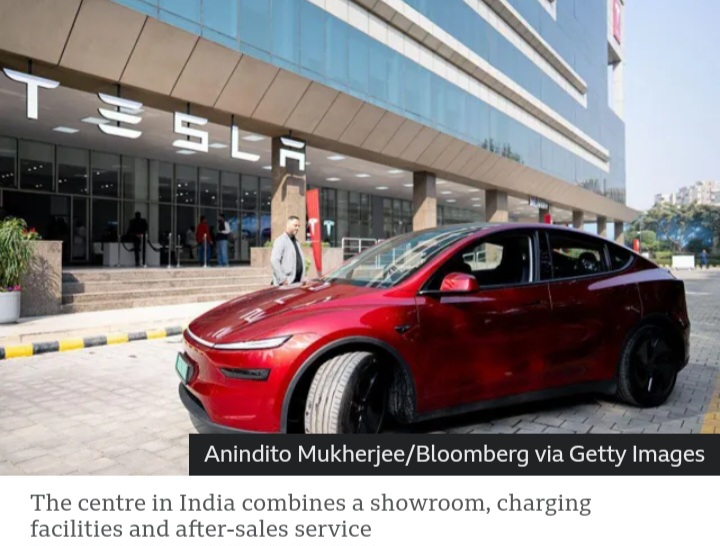
However, and crucially, India imposes some of the highest import duties in the world on fully built vehicles. That bureaucratic barrier nearly doubled the retail price of the company’s flagship SUV Tesla Model Y compared with global markets. Despite the global prestige of Tesla, its entry into the Indian market has been far more muted than many expected. Since opening book-ings in mid-July 2025, Tesla has reportedly received just over 600 orders in India, a tiny fraction of its internal target of 2,500 cars for the year.
As a result, the Model Y comes at a price point that puts it in the rarefied “luxury EV” bracket, a mismatch with the majority of Indian auto-buyers, who remain extremely price-sensitive.
BBC news reports reveal that moreover, Tesla has opted not to take advantage of the Indian government’s new EV-policy incentives, which reduce duties for automakers willing to invest in local manufacturing. Instead, the company is importing cars, not building them locally, undermining the very cost structure needed to make Tesla competitive on price.
Infrastructure and competition add headwinds
Beyond pricing, structural challenges abound. Charging infrastructure in India remains limited, and many roads and traffic conditions are poorly suited for a luxury EV with relatively low ground clearance, posing practical hurdles for everyday use.
At the same time, domestic brands such as Tata Motors, & Mahindra, and other foreign entrants like BYD India, offer EVs at far lower prices and with distribution/service networks already in place. For many buyers, the value proposition simply doesn’t justify Tesla’s premium.
In short: for now, Tesla finds itself stuck between its global luxury-EV identity and an Indian auto market that demands affordability and value, a gap the company has yet to bridge convincingly.





















.jpeg)





































