
Young Boys in Harare Risk Lives Scavenging Scrap Metal Amid Poverty
Children as young as six in Harare, Zimbabwe, are collecting scrap metal to support their families, despite laws prohibiting child labour. The hazardous activity exposes them to serious injuries, with experts calling for government intervention to protect vulnerable children.
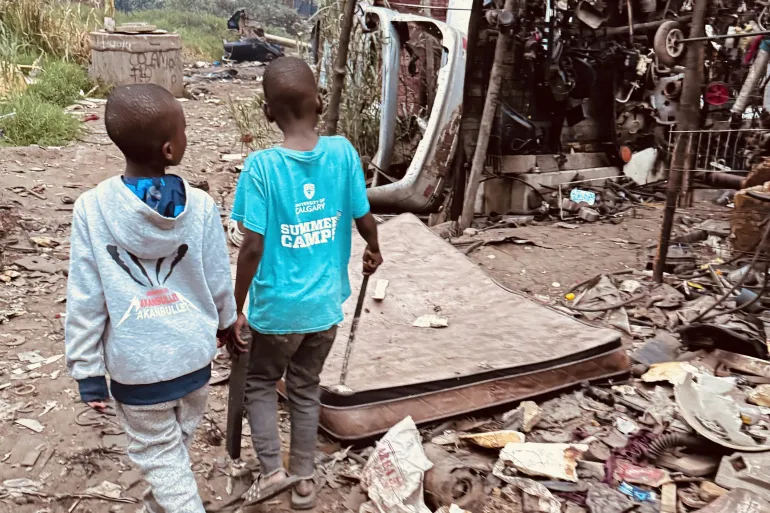
In the bustling suburb of Mbare, young children are risking their safety by scavenging scrap metal to earn money for their families. Boys aged between six and nine can be seen searching steel fabrication sites and rubbish heaps before and after school, collecting discarded metal components to sell to local traders, as reported by Al Jazeera.
Eight-year-old Takudzwa Rapi said that while the work is risky, “we are only afraid of the dogs that can chase you, but usually we are safe, and no one suspects us.” He uses the money earned to buy small items for himself and support his sister at home in the dilapidated Matapi Flats, which suffered a bedbug infestation last year.
At Siyaso Market, informal welding and fabrication yards double as collection points for scrap metal. Children like Takudzwa and Quinton Gandiwa, also eight, forage for metal cut-offs, engine parts, and copper- or brass-coated materials, which fetch higher prices of up to $1 per piece, according to Al Jazeera. Adult traders often underpay children, citing their “small-scale earnings” compared to adult waste-pickers.
The informal scrap trade in Harare has grown substantially, driven by rising global demand for recycled steel, copper, and aluminium. The African Development Bank reported in 2021 that Zimbabwe, which lacks significant domestic iron ore production, relies on scrap metal for steel production, feeding both local and export markets.
However, the work is hazardous. Wayne Mpala, now 33, recalled suffering injuries as a child while scavenging for metal. Adolphus Chinomwe, a senior programme officer at the International Labour Organisation (ILO) Zimbabwe office, described such activities as “hazardous child labour” that exposes children to serious risks, including injury and illness.
Despite Zimbabwe’s constitutional ban on child labour for those under 16, enforcement remains weak. The United States Department of Labor reported in 2022 that children still make up around 14 percent of the workforce in the country, engaged in agriculture, industry, and informal sectors like waste-picking. UNICEF reported in 2025 that nearly 138 million children globally are involved in child labour, with sub-Saharan Africa carrying the highest burden.
For families living in poverty, the income generated by children scavenging scrap metal is often seen as necessary. One parent said, “We cannot afford everything they want, so sometimes it’s good for them to go and earn some money.” Experts emphasize that poverty is a key driver of child labour, which perpetuates a cycle that limits educational opportunities and future employment, according to Chinomwe.
Some children, like Mpala, have continued in the trade into adulthood. Today, he owns a mini-buying centre in Mbare, purchasing scrap metal from other young waste-pickers. He said, “Scrap metal has sustained me both as a boy and now as an adult.”
As Zimbabwe’s informal recycling sector grows, experts are urging the government to implement robust social protection measures to shield children from hazardous work and provide pathways out of poverty, reported Makombera.





















.jpeg)





































